Sacred Flame Tarot









The Hidden Story of Tarot

Tarot has a much more down-to-earth origin than most people expect—it didn’t actually start as a mystical tool.
It first emerged in 15th-century Europe, particularly in Italy and France, where it was enjoyed as a card game called tarocchi. Affluent families would commission exquisitely hand-painted decks, which served more as artistic expressions and entertainment rather than anything spiritual.
The shift into divination came much later, around the 18th century. French occultists like Jean-Baptiste Alliette (also known as Etteilla) began assigning deeper symbolic meanings to the cards and connecting them to mysticism, astrology, and ancient Egyptian lore (even though that Egyptian connection isn’t historically accurate—it was more of a spiritual interpretation than fact).
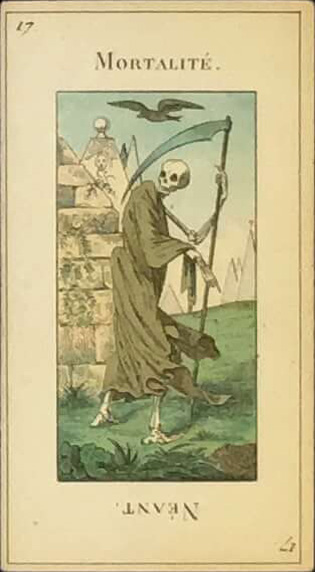
1890 Death Card designed by Alliette/Etteilla
The Cards We Know Today
In the 19th and early 20th centuries, tarot took on the form most people recognize today. Groups like the Hermetic Order of the Golden Dawn played a huge role in shaping tarot symbolism, linking it with Kabbalah, astrology, and ceremonial magic. From this influence came the famous Rider-Waite Tarot Deck, illustrated by Pamela Colman Smith under the direction of Arthur Edward Waite. This deck made tarot much more accessible and is still one of the most widely used today.
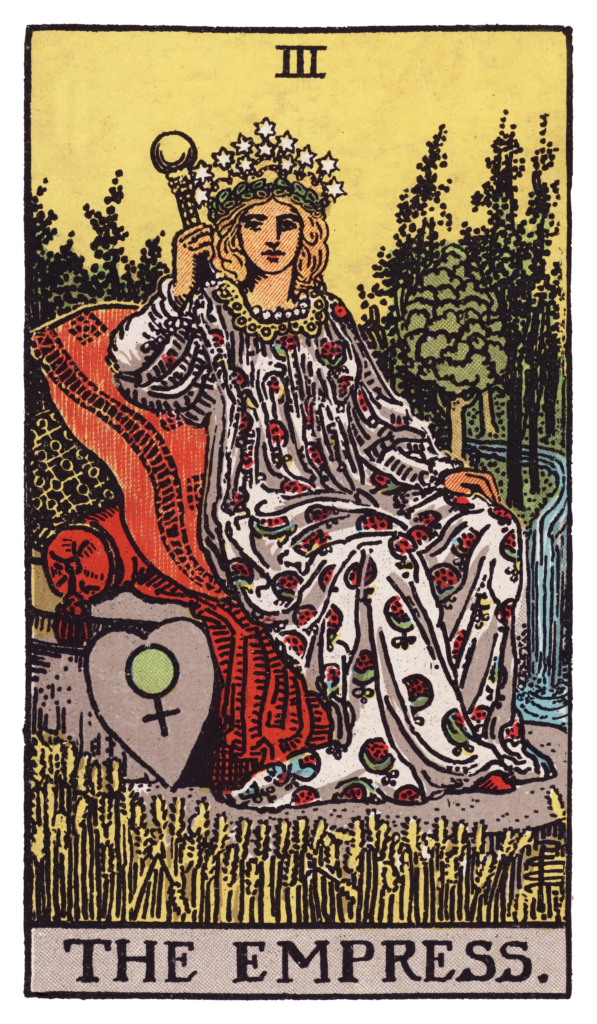

B 2/16/1878 D 9/18/1951

Over time, tarot evolved again—from formal occult systems into a more intuitive, personal practice. Today, people use tarot for reflection, spiritual guidance, creativity, and self-discovery—not just fortune-telling.
So in short:
- 1400s: Card game for entertainment
- 1700s: Begins being used for divination
- 1800s–1900s: Symbolism expands through occult traditions
- Today: A tool for insight, healing, and personal connection
My Take on Tarot
Some people will tell you that your cards should be gifted to you, while others say you should pick them yourself. I say, it doesn’t matter how you acquire them. What matters is your connection to them. For me, choosing a deck is a personal experience. I’ve picked up decks I loved the artwork of, but they didn’t feel “right” in my hands. Others, I’ve picked up and just had to have them. It’s almost like the cards choose me. Think of Harry Potter and how the wands chose their wielder.
I still have my first deck, The Tarot of Witches. I bought it in 1988 or 1989, when I was 13 or 14 years old. Before getting them, I had dabbled with the Ouija board and read books on mysticism, spiritualism, and spirit communication. Today, I have a collection of Tarot Cards, books, pendulums, and crystals. Each one is special and brings me joy.

If you’re interested in Tarot and want a deck, I recommend visiting a local spiritual metaphysical shop. They often have a nice selection, and you’ll be supporting small businesses. Many of these shops also offer various classes and gatherings. Get to know the shop owners and build your community.
Please enjoy this free Tarot Journal that I created just for this article.
Don’t forget to follow me on on Facebook @ Sacred Flame Journey

